
Principles and Characteristics of Nitrogen Generators
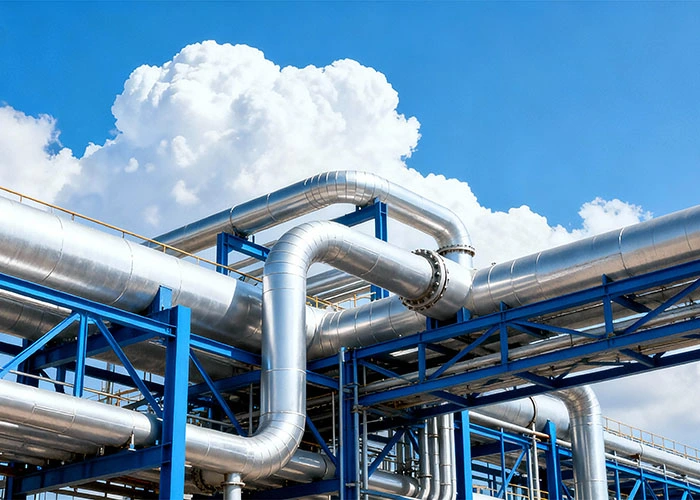
A nitrogen generator is a device that uses air as the raw material and separates oxygen and nitrogen through physical methods to obtain nitrogen gas. According to different separation methods, industrial nitrogen generators can be classified into three types: cryogenic air separation, molecular sieve air separation (PSA), and membrane air separation.
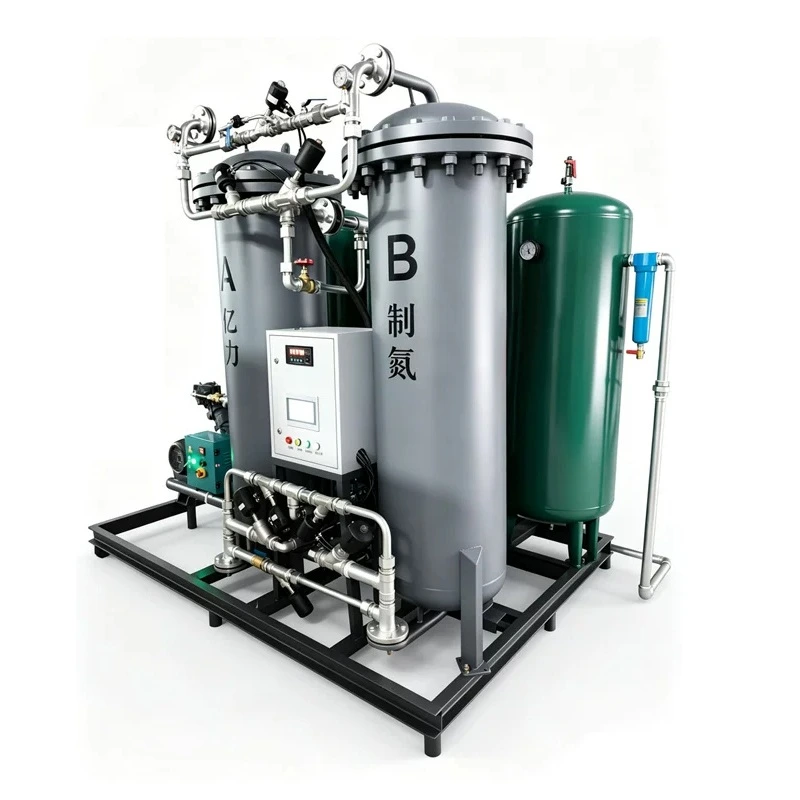
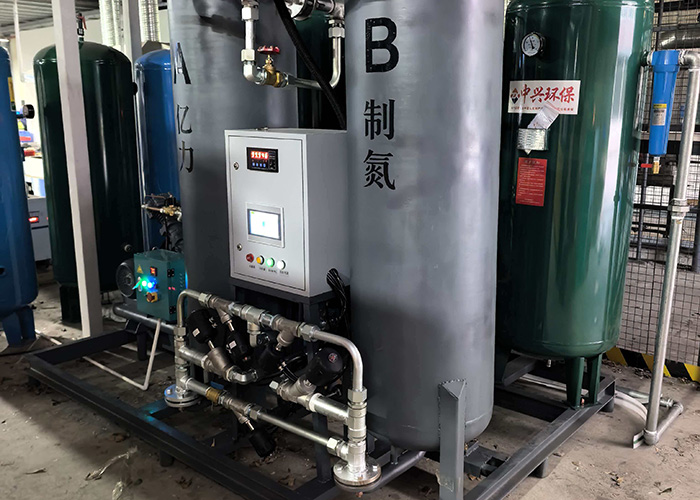
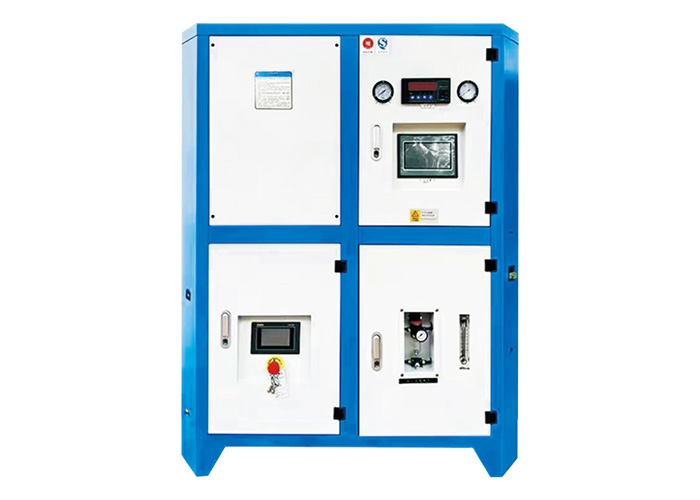
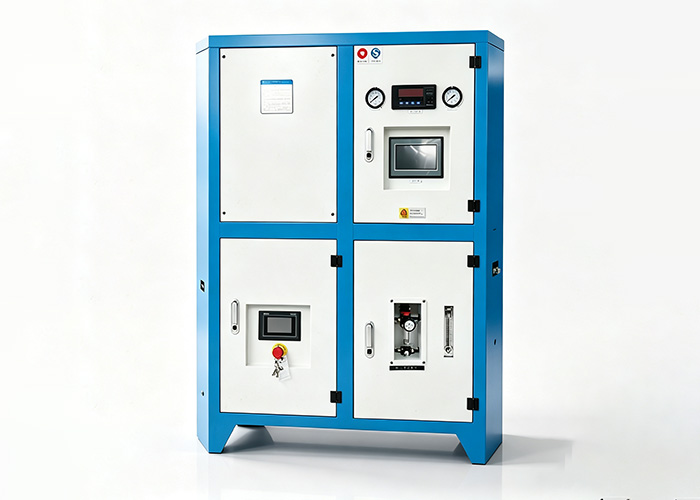
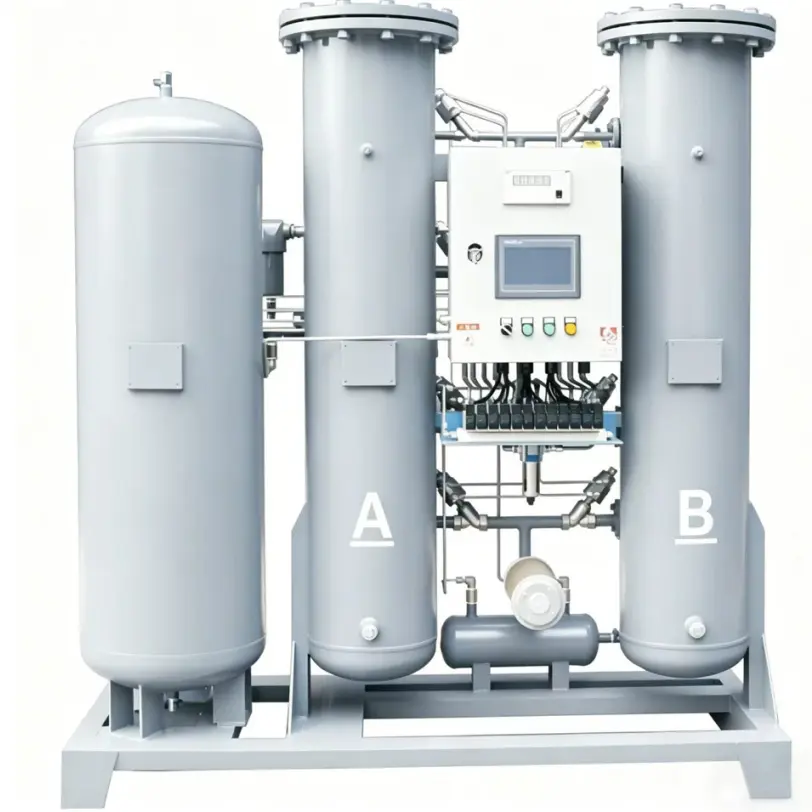
The nitrogen generator is designed and manufactured based on Pressure Swing Adsorption (PSA) technology. It uses high-quality imported Carbon Molecular Sieve (CMS) as the adsorbent and adopts the principle of pressure swing adsorption at normal temperature to separate nitrogen from oxygen in the air, producing high-purity nitrogen. Usually, two adsorption towers are connected in parallel. Controlled by an imported PLC system, the pneumatic valves automatically operate to alternately perform pressurization adsorption and depressurization regeneration, completing oxygen-nitrogen separation and obtaining nitrogen with the required purity.
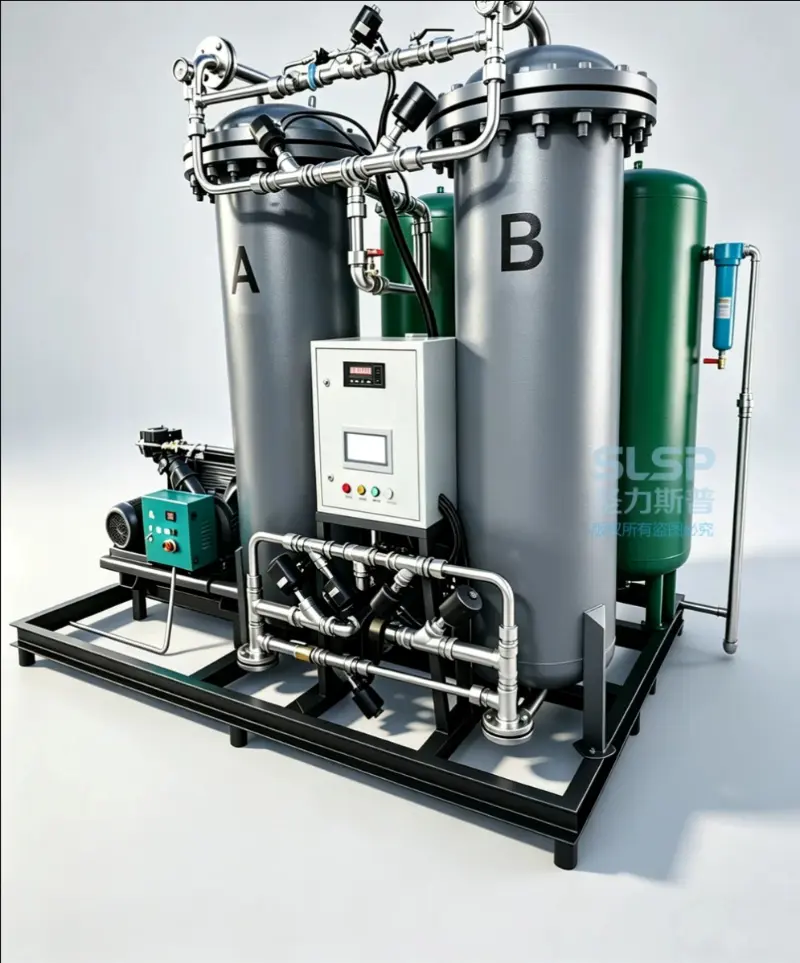
Working Principle of Nitrogen Generator
PSA Pressure Swing Adsorption Nitrogen Generation Principle
Carbon molecular sieve can adsorb both oxygen and nitrogen in the air. Its adsorption capacity increases with increasing pressure. Under the same pressure, there is no obvious difference between the equilibrium adsorption capacity of oxygen and nitrogen. Therefore, it is difficult to achieve effective oxygen-nitrogen separation only through pressure changes.
By considering the adsorption rate difference, the adsorption characteristics of oxygen and nitrogen can be effectively distinguished. The molecular diameter of oxygen is smaller than that of nitrogen, so its diffusion rate is hundreds of times faster than nitrogen. Therefore, carbon molecular sieve adsorbs oxygen much faster. After approximately one minute of adsorption, more than 90% of oxygen can be adsorbed, while the adsorption amount of nitrogen is only about 5%.
At this stage, the adsorbed gas is mainly oxygen, while the remaining gas is mainly nitrogen. By controlling the adsorption time within one minute, oxygen and nitrogen can be initially separated. In other words, adsorption and desorption are achieved through pressure differences: adsorption occurs when pressure increases, and desorption occurs when pressure decreases.
The separation of oxygen and nitrogen depends on the difference in adsorption speed between the two gases. By controlling the adsorption time, oxygen can be sufficiently adsorbed while nitrogen has insufficient time to be adsorbed, and then the adsorption process is stopped to achieve efficient nitrogen production.
Cryogenic Air Separation Nitrogen Generation Principle
Cryogenic nitrogen generation can produce not only nitrogen gas but also liquid nitrogen, meeting process requirements where liquid nitrogen is required. Liquid nitrogen can be stored in a liquid nitrogen storage tank. When nitrogen supply is interrupted or the air separation unit requires maintenance, the stored liquid nitrogen enters the vaporizer, is heated, and then supplied into the nitrogen pipeline to meet the nitrogen requirements of the process equipment.
The operating cycle of cryogenic nitrogen generation (the interval between two major warming operations) is generally more than one year. Therefore, backup equipment is usually not considered for cryogenic nitrogen generation systems. However, PSA nitrogen generators can only produce nitrogen gas without backup storage capability, and a single unit cannot guarantee continuous long-term operation.
Membrane Air Separation Nitrogen Generation Principle
After being compressed and filtered by an air compressor, air enters a high-polymer membrane separator. Due to differences in solubility and diffusion coefficients of various gases in the membrane, different gases have different permeation rates.
Based on this characteristic, gases can be divided into "fast gases" and "slow gases".
Under the pressure difference between both sides of the membrane, gases with faster permeation rates, such as water vapor, hydrogen, helium, hydrogen sulfide, and carbon dioxide, pass through the membrane and become enriched on the permeate side.
Meanwhile, gases with slower permeation rates, such as methane, nitrogen, carbon monoxide, and argon, are retained and enriched on the feed side, thereby achieving separation of mixed gases.
Features of Nitrogen Generator Equipment
Convenient and Fast
With advanced technology and a unique airflow distribution system, the gas flow distribution is more uniform, enabling efficient utilization of carbon molecular sieve. Qualified nitrogen can be produced within approximately 20 minutes.
Easy Operation
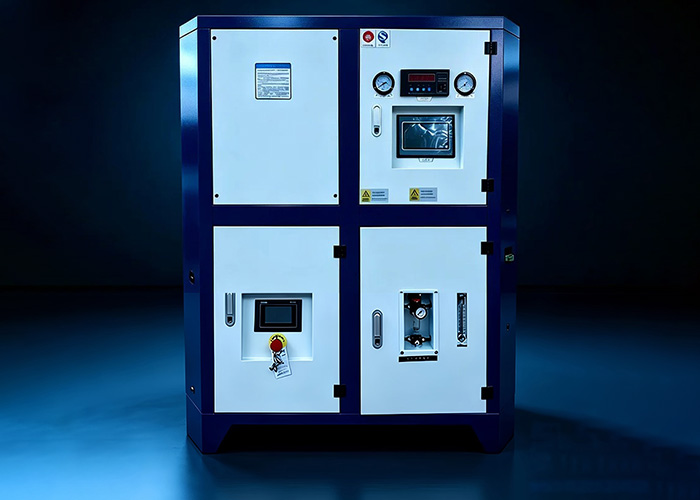
The equipment features a compact structure and integrated skid-mounted design, requiring less installation space and no civil construction investment. With low initial investment, users only need to connect the power supply on site to start nitrogen production.
Economical Operation
PSA technology is a simple and efficient nitrogen generation method that uses air as the raw material. Its energy consumption mainly comes from the electricity consumed by the air compressor. It features low operating costs, low energy consumption, and high efficiency.
Related News
- Common Mistakes When Sizing A PSA Nitrogen Generator - Avoid Over-Spec & Under-Spec Pitfalls
- Nitrogen Generator Installation Site Requirements: What Conditions Should Your Workshop Prepare In Advance
- Total Cost Of Ownership(TCO) For Nitrogen Generator: Do Not Only Compare Initial Purchase Price
- Nitrogen Generator Outlet Pressure Unstable - Common Causes & Troubleshooting For End-Users
- PSA VS Membrane Nitrogen Generator: Which Technology Suits Your Production Application
- How Ambient Humidity Affects the PSA Nitrogen Generator Performance
Leave me a message