
How to Choose the Right Nitrogen Generator
Before determining specific model specifications—such as nitrogen production rate per hour, nitrogen purity, outlet pressure, and dew point—it is essential to conduct a comprehensive comparison and analysis of the nitrogen generator's performance and features, while also making appropriate choices based on your existing environmental conditions.
Nitrogen requirements across various industries
a. Metallurgy and metal processing industries
These industries may require nitrogen with a purity greater than 99.5%, while others demand high-purity nitrogen with a purity exceeding 99.9995% and a dew point below -65°C, depending on the specific production needs of each customer.
b Chemical and new materials industry
Generally, the purity requirement for nitrogen is not high, and many applications can use nitrogen with a purity greater than 98%. However, the actual requirement depends on the customer's specific production process.
c Food and Pharmaceutical Industry
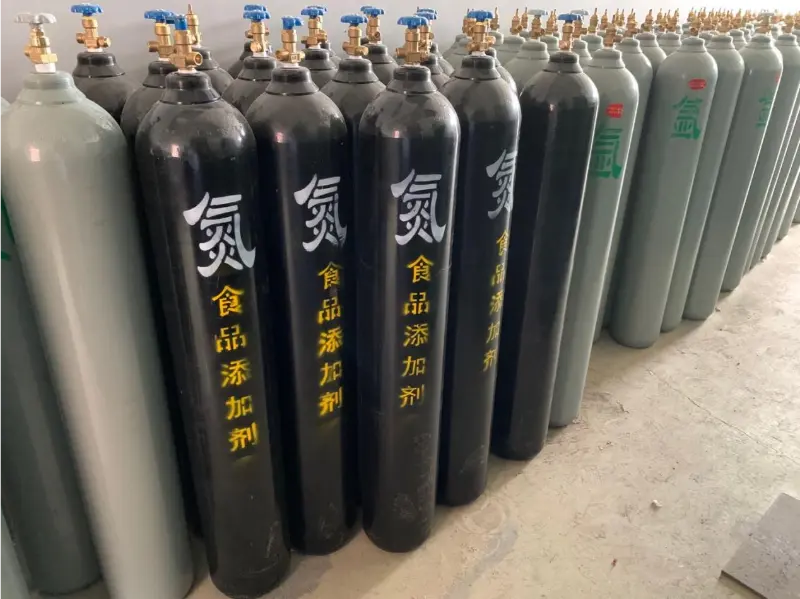
Most food industries have relatively low requirements for nitrogen, with a purity of 99.5% to 99.9% being sufficient. However, a small portion of the food industry requires 99.99% purity due to specific process needs. The pharmaceutical industry typically demands nitrogen with a purity of 99.99% and requires equipment made of stainless steel.
The electronics industry generally has high requirements for nitrogen, typically requiring a purity of 99.99% or higher.
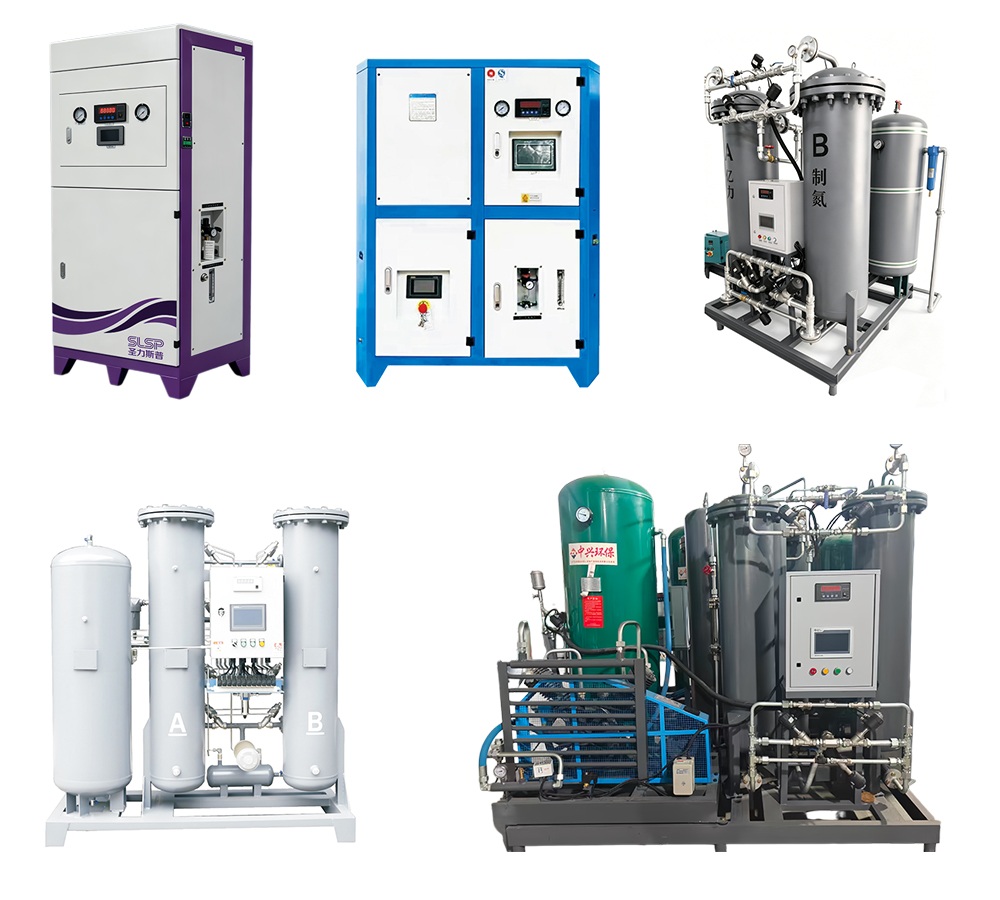
Comparison of Various Nitrogen Generators
a. Cryogenic Air Separation Nitrogen Generator
Cryogenic air separation is a traditional method of nitrogen production with nearly several decades of history. It uses air as the raw material, which is first compressed and purified, then liquefied through heat exchange to form liquid air. Liquid air is primarily a mixture of liquid oxygen and liquid nitrogen. By exploiting their different boiling points (at 1 atmosphere pressure, oxygen boils at -183°C and nitrogen at -196°C), distillation of the liquid air separates them to produce nitrogen gas. This method involves complex equipment, large footprint, high construction costs, substantial initial investment, relatively high operating expenses, slow gas production (12–24 hours), high installation requirements, and long commissioning periods. Considering equipment, installation, and infrastructure factors, for units below 3500 Nm³/h, PSA systems of the same capacity require 20% to 50% less investment than cryogenic air separation units. Therefore, cryogenic air separation is suitable for large-scale industrial nitrogen production, while it becomes uneconomical for medium- and small-scale applications.
b PSA Pressure Swing Adsorption Nitrogen Generator
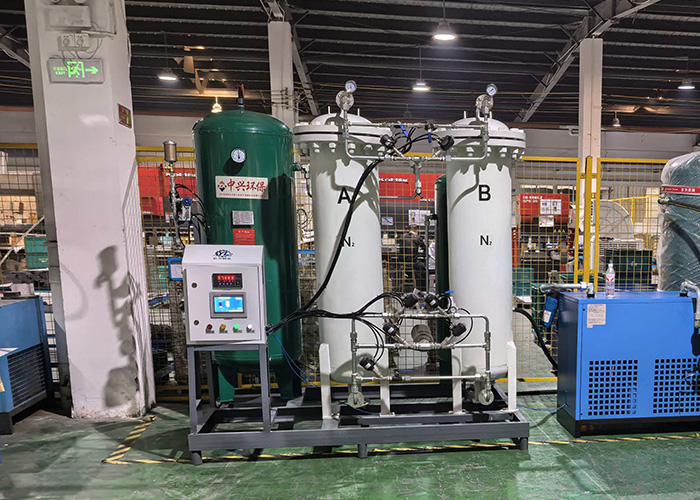
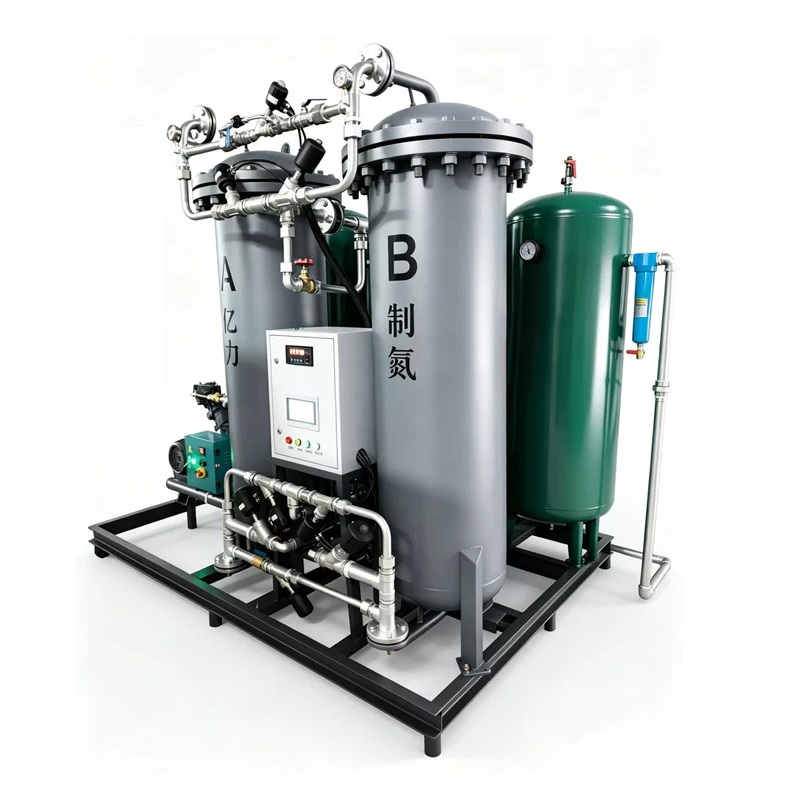
Using air as the raw material and carbon molecular sieves as adsorbents, this method employs the principle of pressure swing adsorption to separate nitrogen from oxygen based on the selective adsorption properties of carbon molecular sieves. This process is commonly known as PSA nitrogen generation. Developed rapidly in the 1970s, it represents a new nitrogen production technology. Compared with traditional methods, PSA offers advantages such as simple process flow, high automation level, fast gas production (15–30 minutes), low energy consumption, adjustable product purity over a wide range according to user requirements, convenient operation and maintenance, low operating costs, and strong equipment adaptability. As a result, it is highly competitive in nitrogen generation systems below 1000 Nm³/h and has gained increasing popularity among medium- and small-scale nitrogen users. PSA nitrogen generation has become the preferred choice for such users.
C Membrane Nitrogen Generator
Using air as the raw material, this device separates oxygen and nitrogen by exploiting their different permeation rates through a membrane under specific pressure conditions. Compared to other nitrogen generation equipment, it features a simpler structure, smaller size, no switching valves, lower maintenance requirements, faster gas production (≤3 minutes), and easy capacity expansion. It is particularly suitable for medium- and small-scale users requiring nitrogen purity of ≤98%, offering excellent cost-effectiveness. However, when nitrogen purity exceeds 98%, its price is over 15% higher than that of PSA nitrogen generators of the same specifications.
Factors affecting the cost of nitrogen generators
1. One-time purchase cost of the entire system. Currently, there are many brands on the market, with quality and price generally proportional.
2. Equipment operational stability and estimated service life.
3. Annual operation, maintenance, and servicing costs.
4. Daily electricity and water expenses.
Related News
- Successful Shipment | 5m³ Nitrogen Generator Ready for Delivery to Quanzhou, Fujian
- Guangdong Yili Machinery Equipment Co., Ltd. Successfully Delivered PSA Nitrogen Generator to Customer
- Reputation Drives Trust | Air Compressor Prepared for Shipment from Foshan Factory to Fujian Customer
- Order Delivered on Schedule | All-in-One Air Compressor Fully Assembled and Shipped to Dongguan Client
- Industrial Nitrogen Generator Improves Kettle Welding Quality with Outstanding On-Site Trial Results
- Gas Supply System Commissioning Complete! In-house Air Compressor & Nitrogen Generator Paired with RayTools Laser Cutting Head—Elevating Galvanized Sheet Cutting Quality
Leave me a message